
Disclaimer: Information is for research and educational purposes only. Catalog materials are not approved for human or veterinary use.
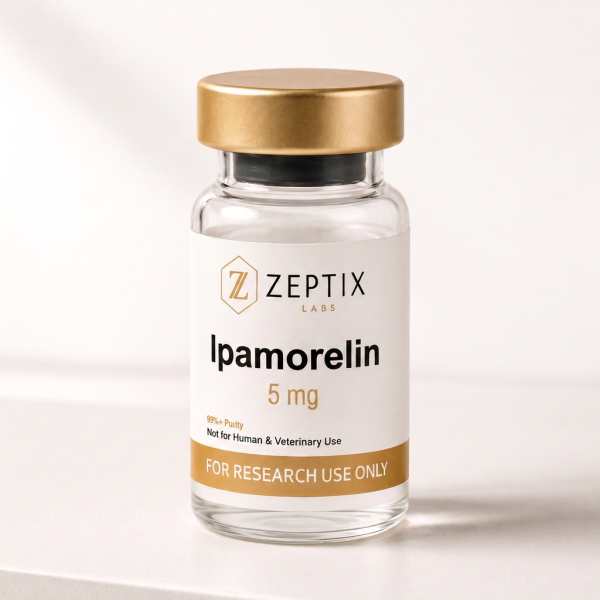
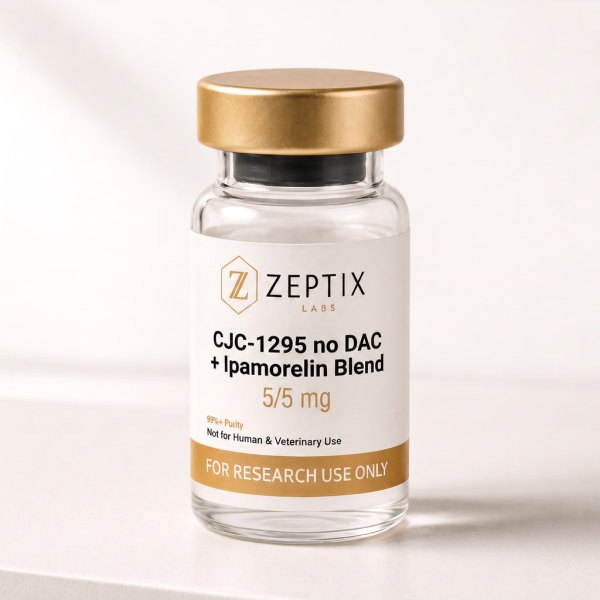
CJC-1295 is a synthetic GHRH analog. Papers describe receptor activation and downstream GH / IGF-1 signaling in experimental settings. That is not a consumer benefit list, and the Zeptix SKU is a no-DAC blend with ipamorelin, which is a different reagent from the DAC-bearing analog used in some papers.12
What to match before you cite a “benefit”
DAC versus no DAC changes half-life and binding stories in the literature. A blend adds a second ligand. If the protocol needs a single GHRH analog variable, this blend is the wrong control.3
For laboratory research only. Not for human or veterinary use.
Research context and evidence base
CJC-1295 is a GHRH analog family in which DAC status materially changes the experimental object. DAC-bearing and no-DAC forms differ in binding and exposure assumptions, while a product blended with ipamorelin introduces a second receptor ligand. Literature review and inventory records should identify the exact form rather than relying on the shortened catalog name.12
How to interpret the published evidence
For this topic, the word “benefit” should be translated into a specific measured outcome. Cell-signaling changes, animal histology, pharmacokinetic movement, and validated clinical endpoints sit at different levels of evidence. They cannot be combined into one general promise. Read the population, model, control group, endpoint definition, and statistical limits before drawing a conclusion.3
Experimental design questions
CJC-1295 design begins by naming DAC status and whether ipamorelin is present. Suitable controls may include vehicle, the exact CJC form alone, ipamorelin alone, and the blend. Exposure windows and sampling schedules derived from DAC-bearing analogs should not be transferred to no-DAC material without validation.
Building a reproducible laboratory record
For work involving CJC-1295 Benefits, record the supplier, SKU, lot number, labeled amount, receipt date, storage history, reconstitution conditions, concentration calculation, control material, instrument or assay version, and prespecified endpoint. Keep the matching certificate of analysis with the run record. These details make a result auditable and help distinguish biological variation from a handling or identity problem.
- Match the exact compound, sequence, modification, and formulation to the cited methods.
- Use positive, negative, and vehicle controls appropriate to the assay.
- Define concentrations, time points, exclusions, and endpoints before reviewing results.
- Report null and unexpected findings alongside the planned readouts.
Quality, limitations, and research-use status
A certificate of analysis supports lot traceability but does not establish a biological outcome. Investigators remain responsible for method suitability, independent confirmation when required, and compliance with institutional rules. Zeptix Labs materials are supplied for qualified laboratory research only and are not drugs, supplements, cosmetics, foods, or materials for human or veterinary administration.
Reporting results without overreach
When reporting CJC-1295 Benefits, state what the experiment directly measured and keep interpretation within that boundary. Include model limitations, uncertainty, failed quality controls, and alternative explanations. Avoid turning preclinical observations into treatment language or assuming that a statistically significant marker change is biologically important. Clear limitations make the article more useful to researchers and prevent laboratory evidence from being mistaken for consumer guidance.
References
- Teichman, S. L., et al. “Prolonged Stimulation of Growth Hormone (GH) and Insulin-Like Growth Factor I Secretion by CJC-1295, a Long-Acting Analog of GH-Releasing Hormone, in Healthy Adults.” Journal of Clinical Endocrinology & Metabolism 91, no. 3 (2006): 799–805. https://pubmed.ncbi.nlm.nih.gov/16352683/
- Ionescu, M., and Frohman, L. A. “Pulsatile Secretion of Growth Hormone (GH) Persists during Continuous Stimulation by CJC-1295, a Long-Acting GH-Releasing Hormone Analog.” Journal of Clinical Endocrinology & Metabolism 91, no. 12 (2006): 4792–97. https://pubmed.ncbi.nlm.nih.gov/17018654/
- Jetté, L., et al. “hGRF1-29-NH2 Analogues Containing a Cys–PEG Adduct Show Improved Pharmacokinetic Profiles in Rats.” Peptides 26, no. 10 (2005). Related DAC / analog chemistry context. https://pubmed.ncbi.nlm.nih.gov/?term=CJC-1295+DAC+GHRH
- Rivier J, Spiess J, Thorner MO, Vale W. Characterization of a growth hormone-releasing factor from a human pancreatic islet tumour. Nature. 1982;300(5889):276–278. https://pubmed.ncbi.nlm.nih.gov/6292724/
- Guillemin R, Brazeau P, Bohlen P, et al. Growth hormone-releasing factor from a human pancreatic tumor that caused acromegaly. Science. 1982;218(4572):585–587. https://pubmed.ncbi.nlm.nih.gov/6812220/
- Losa M, Schopohl J, von Werder K. Stimulation of GH with human GRF1-44, GRF1-40, and GRF1-29 in normal subjects. Klin Wochenschr. 1984;62(23):1109–1113. https://pubmed.ncbi.nlm.nih.gov/6240568/
- Barron JL, Hopkins KD, Dunger DB, Hesp R, White A. GHRH (1-29)-NH₂ and a D-Ala² analog are potent stimulators of GH release in normal men. Clin Endocrinol (Oxf). 1985;23(4):399–407. https://pubmed.ncbi.nlm.nih.gov/2866496/ https://pubmed.ncbi.nlm.nih.gov/2866496/?utm_source=chatgpt.com
- Teichman SL, Neale A, Lawrence B, Gagnon C, Castaigne JP, Frohman LA. Prolonged stimulation of growth hormone and insulin-like growth factor I secretion by CJC-1295, a long-acting analog of GH-releasing hormone, in healthy adults. J Clin Endocrinol Metab. 2006;91(3):799–805. https://pubmed.ncbi.nlm.nih.gov/16352683/ https://pubmed.ncbi.nlm.nih.gov/16352683/?utm_source=chatgpt.com
- Ionescu M, Frohman LA. Pulsatile secretion of growth hormone persists during continuous stimulation by CJC-1295, a long-acting growth hormone-releasing hormone analog. J Clin Endocrinol Metab. 2006;91(12):4792–4797. https://pubmed.ncbi.nlm.nih.gov/17018654/ https://pubmed.ncbi.nlm.nih.gov/17018654/?utm_source=chatgpt.com
- Sackmann-Sala L, et al. Activation of the GH/IGF-1 axis by CJC-1295, a long-acting GHRH analog. Clin Cancer Res. 2009. https://pmc.ncbi.nlm.nih.gov/articles/PMC2787983/ https://pmc.ncbi.nlm.nih.gov/articles/PMC2787983/?utm_source=chatgpt.com