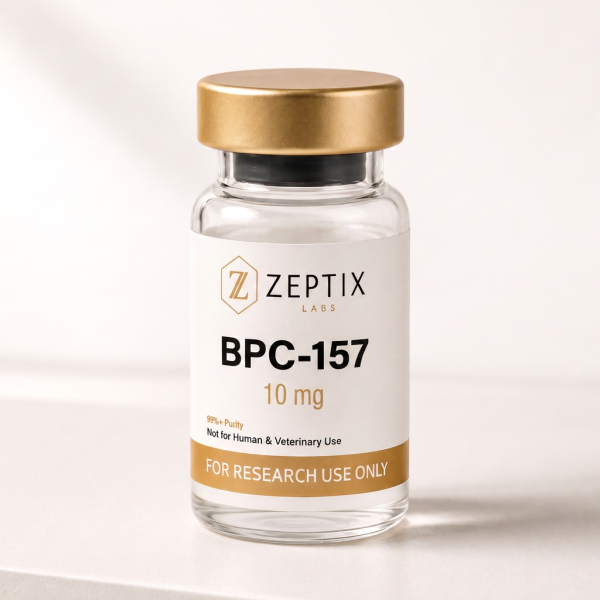

Disclaimer: Information is for research and educational purposes only. Catalog materials are not approved for human or veterinary use.
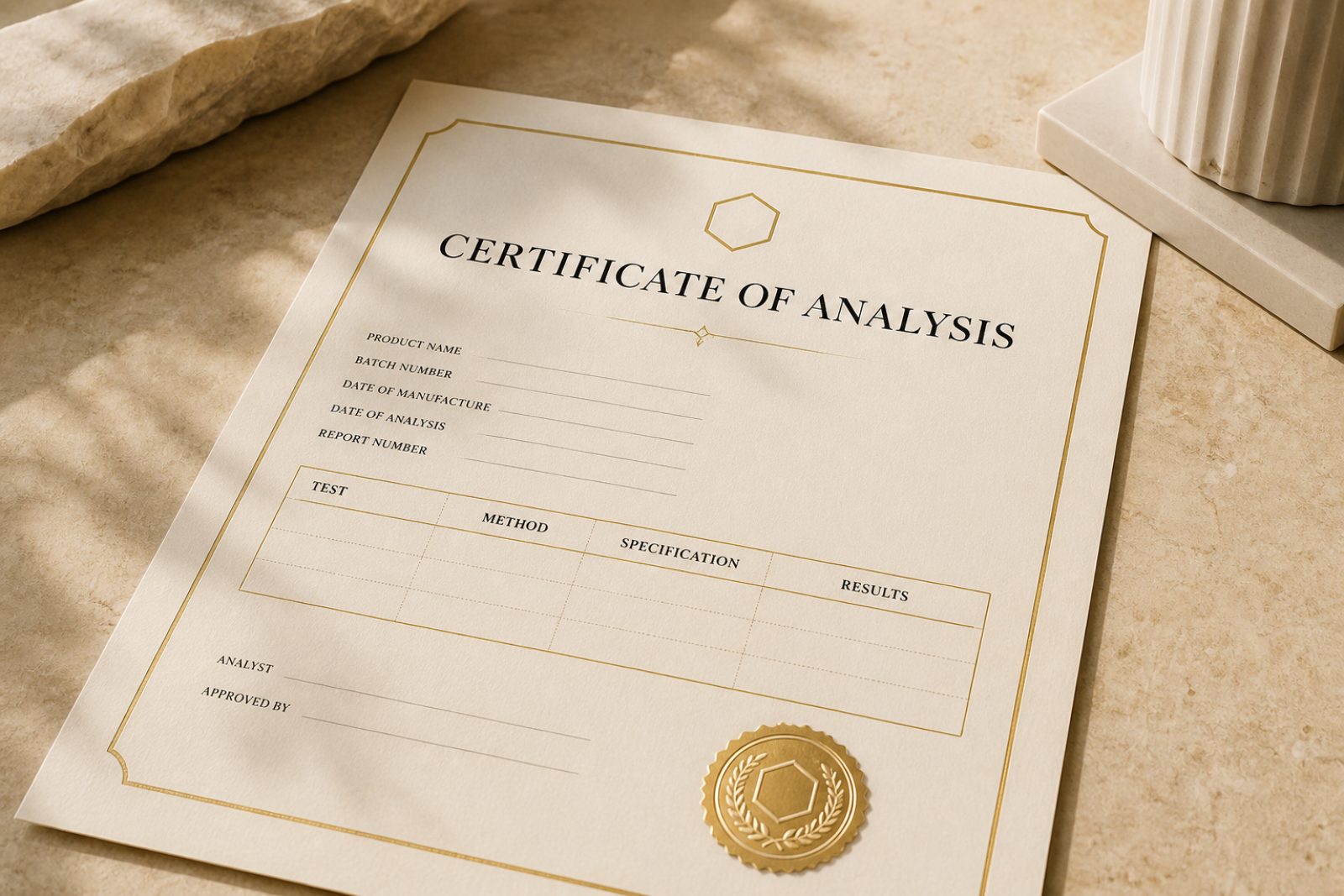
A Certificate of Analysis is the lot record for a research compound. It should tell you what was tested, how it was tested, and whether the result met the stated specification. For peptide work, that document is usually the first thing a lab checks before a vial enters a protocol.
Identity first
Purity is useless if the peak is the wrong molecule. Identity methods commonly include mass spectrometry or an equivalent confirmation that the observed mass matches the labeled sequence. The product name on the vial should match the COA lot and the catalog SKU.
Purity and method
Chromatographic purity is typically reported as a percentage from HPLC or a related technique. The method line matters as much as the number. HPLC-UV, LC-MS, and other techniques answer slightly different questions. A lab that needs orthogonal confirmation will look for more than a single percentage.
- Purity %: the numerical result for that lot, tied to the method used.
- Method: the analytical technique used, not a brand slogan.
- Laboratory: the testing provider named on the document.
- Result: pass or fail against the spec written on the COA.
Lot numbers and file hygiene
Keep the PDF with the lot. If a protocol spans multiple vials, record which lot went into which experiment. Zeptix Labs publishes available certificates in the COA library so researchers can retrieve the file that belongs to a catalogue SKU.
A COA supports laboratory documentation. It is not a license for human or veterinary use, and it is not a substitute for your own verification when a protocol requires it.
Research context and evidence base
A peptide certificate of analysis connects a named lot to a defined analytical result. Chromatographic purity, identity confirmation, method suitability, sample preparation, system controls, and acceptance criteria answer different questions. A percentage without the method and matching lot number is not enough to establish that the material fits a research protocol.12
How to interpret the published evidence
Evidence should be sorted by study type before it is summarized. Analytical characterization establishes what material was tested; cell work can suggest pathways; animal models can explore integrated biology; and human studies, when they exist, apply only to their regulated product, population, and design. One layer should not be presented as if it proves the next.3
Experimental design questions
COA review should ask whether the analytical procedure is suitable for the claimed result. Identity and purity need different evidence; system suitability, reference standards, integration rules, detection wavelength, mass tolerance, and sample handling can all affect interpretation. When a protocol is sensitive to impurities or counterions, an additional orthogonal method may be appropriate.
Building a reproducible laboratory record
For work involving How to Read a Peptide Certificate of Analysis, record the supplier, SKU, lot number, labeled amount, receipt date, storage history, reconstitution conditions, concentration calculation, control material, instrument or assay version, and prespecified endpoint. Keep the matching certificate of analysis with the run record. These details make a result auditable and help distinguish biological variation from a handling or identity problem.
- Match the exact compound, sequence, modification, and formulation to the cited methods.
- Use positive, negative, and vehicle controls appropriate to the assay.
- Define concentrations, time points, exclusions, and endpoints before reviewing results.
- Report null and unexpected findings alongside the planned readouts.
Quality, limitations, and research-use status
A certificate of analysis supports lot traceability but does not establish a biological outcome. Investigators remain responsible for method suitability, independent confirmation when required, and compliance with institutional rules. Zeptix Labs materials are supplied for qualified laboratory research only and are not drugs, supplements, cosmetics, foods, or materials for human or veterinary administration.
Reporting results without overreach
When reporting How to Read a Peptide Certificate of Analysis, state what the experiment directly measured and keep interpretation within that boundary. Include model limitations, uncertainty, failed quality controls, and alternative explanations. Avoid turning preclinical observations into treatment language or assuming that a statistically significant marker change is biologically important. Clear limitations make the article more useful to researchers and prevent laboratory evidence from being mistaken for consumer guidance.
References
- International Council for Harmonisation. “Validation of Analytical Procedures Q2(R2).” ICH Harmonised Guideline (2023). https://database.ich.org/sites/default/files/ICH_Q2%28R2%29_Guideline_2023_1130.pdf
- U.S. Food and Drug Administration. “Analytical Procedures and Methods Validation for Drugs and Biologics.” Guidance for Industry (2015). https://www.fda.gov/regulatory-information/search-fda-guidance-documents/analytical-procedures-and-methods-validation-drugs-and-biologics
- International Council for Harmonisation. “Analytical Procedure Development Q14.” ICH Harmonised Guideline (2023). https://database.ich.org/sites/default/files/ICH_Q14_Guideline_2023_1116.pdf