

Disclaimer: Information is for research and educational purposes only. Catalog materials are not approved for human or veterinary use.
Peptides are short chains of amino acids. In a laboratory catalog they are reference materials: defined sequences used to study signaling, receptor binding, analytical methods, and cellular response. They are not finished drugs, foods, or cosmetics.
Zeptix Labs supplies research-grade peptides for qualified laboratory work. Every listing on this site is research use only. Nothing here is offered for human or veterinary administration.
How peptides differ from proteins
Proteins are long, folded chains. Peptides are shorter, often synthesized to a known sequence, then lyophilized for storage. That length makes them useful as probes. A lab can vary one residue, compare analogs, or run identity assays without the complexity of a full protein expression system.
What “research use only” means
Research-use labeling is a use restriction, not a marketing slogan. The material is intended for in-vitro work, analytical methods, and other controlled laboratory protocols. It is not a prescription product, a supplement, or a compounding ingredient.
- Identity should be confirmed against the labeled sequence and lot paperwork.
- Purity is typically reported by HPLC or an equivalent chromatographic method.
- Handling, reconstitution, and storage belong in the lab notebook, not in consumer instructions.
How laboratories typically work with peptides
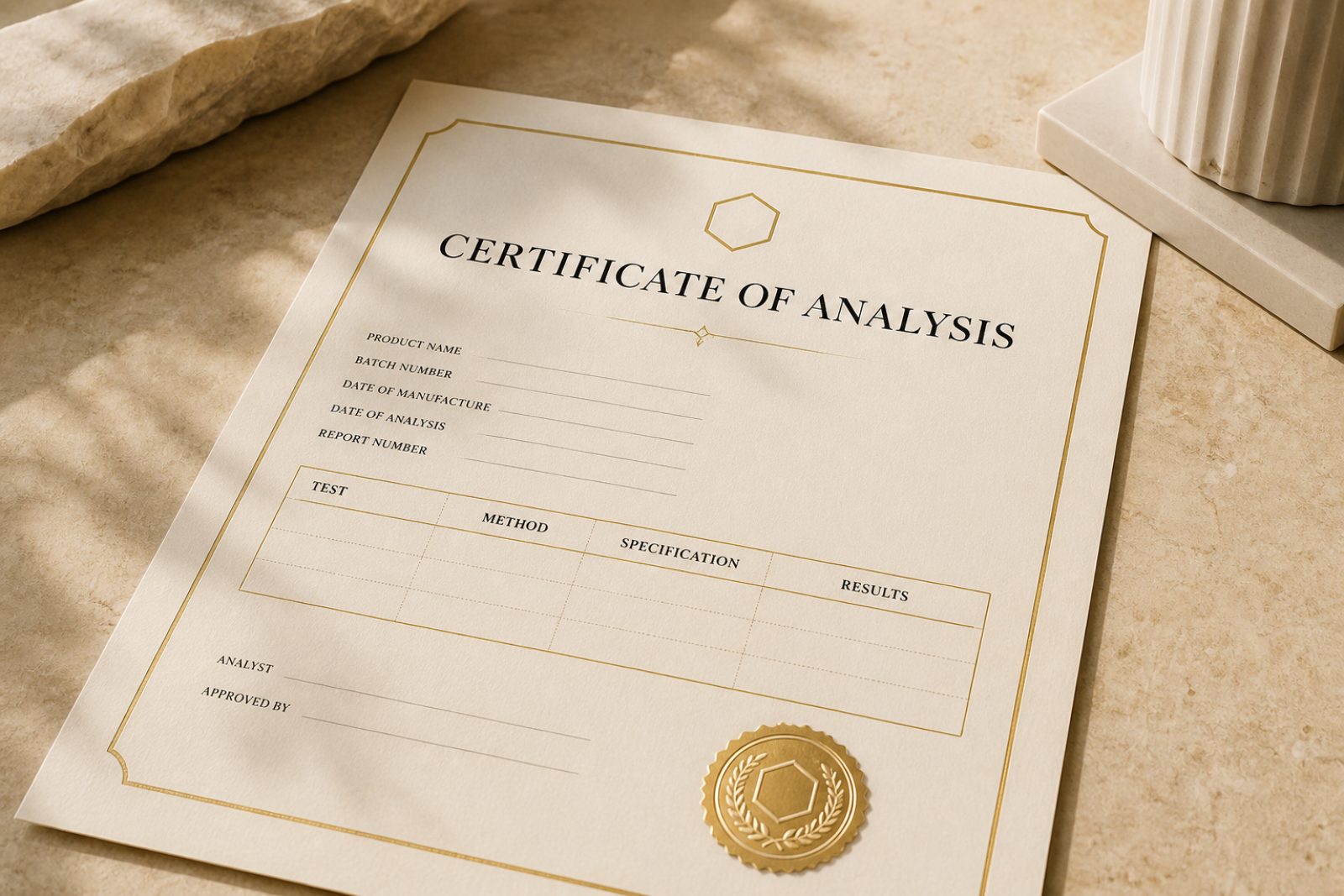
Most catalog peptides arrive lyophilized. Teams record lot numbers, store vials under the conditions listed on the batch documents, and reconstitute only when a protocol requires it. Related reading covers storage and how to read a Certificate of Analysis.
The Zeptix Labs catalog
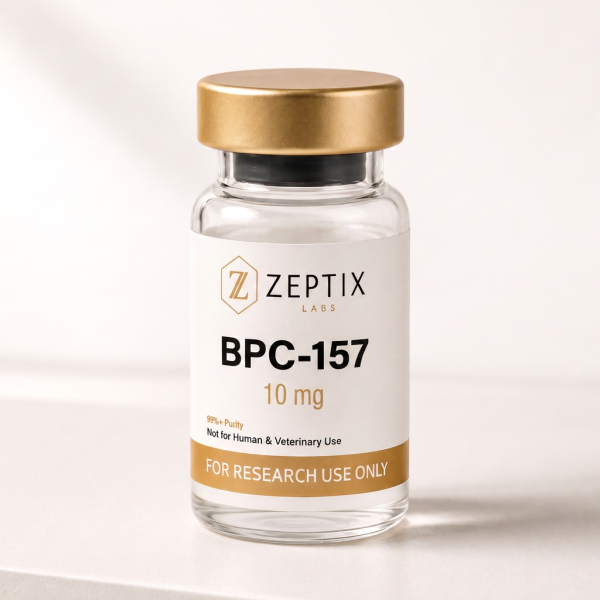
The shop is organized by research theme: recovery peptides such as BPC-157 and TB-500, copper-peptide and blend work such as GHK-Cu, GLOW, and KLOW, metabolic compounds such as Tesamorelin, MOTS-c, and the GLP series, and hormone-axis blends such as CJC-1295 no DAC with Ipamorelin. Bacteriostatic water is listed as a laboratory reagent, not a peptide.
All Zeptix Labs products are for qualified laboratory research. They are not intended to diagnose, treat, cure, or prevent any disease.
Research context and evidence base
Research peptides are defined by sequence, chemical modifications, counterions, purity, and lot-level identity. Two vials with similar marketing names can still be different experimental materials. Reliable work begins with a clear research question and documentation that connects the ordered SKU, certificate of analysis, storage history, and protocol record.12
How to interpret the published evidence
Evidence should be sorted by study type before it is summarized. Analytical characterization establishes what material was tested; cell work can suggest pathways; animal models can explore integrated biology; and human studies, when they exist, apply only to their regulated product, population, and design. One layer should not be presented as if it proves the next.3
Experimental design questions
A peptide experiment should begin with a testable hypothesis and a material specification. Sequence, terminal modifications, salt or counterion, purity threshold, concentration method, vehicle, controls, replicates, and acceptance criteria should be selected before data collection. Predefining these elements reduces avoidable flexibility and makes later comparisons between lots or laboratories more meaningful.
Building a reproducible laboratory record
For work involving What Are Research Peptides, record the supplier, SKU, lot number, labeled amount, receipt date, storage history, reconstitution conditions, concentration calculation, control material, instrument or assay version, and prespecified endpoint. Keep the matching certificate of analysis with the run record. These details make a result auditable and help distinguish biological variation from a handling or identity problem.
- Match the exact compound, sequence, modification, and formulation to the cited methods.
- Use positive, negative, and vehicle controls appropriate to the assay.
- Define concentrations, time points, exclusions, and endpoints before reviewing results.
- Report null and unexpected findings alongside the planned readouts.
Quality, limitations, and research-use status
A certificate of analysis supports lot traceability but does not establish a biological outcome. Investigators remain responsible for method suitability, independent confirmation when required, and compliance with institutional rules. Zeptix Labs materials are supplied for qualified laboratory research only and are not drugs, supplements, cosmetics, foods, or materials for human or veterinary administration.
Reporting results without overreach
When reporting What Are Research Peptides, state what the experiment directly measured and keep interpretation within that boundary. Include model limitations, uncertainty, failed quality controls, and alternative explanations. Avoid turning preclinical observations into treatment language or assuming that a statistically significant marker change is biologically important. Clear limitations make the article more useful to researchers and prevent laboratory evidence from being mistaken for consumer guidance.
References
- U.S. Food and Drug Administration. Distribution of In Vitro Diagnostic Products Labeled for Research Use Only or Investigational Use Only: Guidance for Industry and FDA Staff. November 2013. Accessed November 19, 2025.
- Vincent Balgos. “An Introduction to Research Use Only (RUO).” Jama Software Blog, June 2025.
- Joanne S. Hawana and Benjamin M. Zegarelli. “FDA Warning Letter Is a Stark Reminder That If You Claim Your Product Is RUO, It Has to Be RUO.” Mintz Insights, April 3, 2024.
- Johnathon D. Anderson, PhD. “Certified Peptides: A Complete Scientific Guide to Authentic, Verified Research-Grade Peptides.” Peptide Systems Blog, October 8, 2024.
- Johnathon D. Anderson, PhD. “What ‘Premium’ Really Means and How to Choose a Trusted Peptide Supplier.” Peptide Systems Blog, 2025.
- Dr. Numan S. “Certificates of Analysis for Peptides: What Researchers Need to Know.” Verified Peptides Knowledge Hub, August 7, 2025.
- FDA Warning Letter to USApeptide.com. “Notice of Unlawful Sale of Unapproved and Misbranded Drugs” (MARCS-CMS 696885). February 26, 2025.
- Matthew Perrone. “A Closer Look at the Unapproved Peptide Injections Promoted by Influencers and Celebrities.” AP News, July 13, 2023.
- FDA. Distribution of In Vitro Diagnostic Products Labeled for Research Use Only or Investigational Use Only. 2013.
- USP. General Chapter <1041> Biologics. U.S. Pharmacopeia.