
Disclaimer: Information is for research and educational purposes only. Catalog materials are not approved for human or veterinary use.
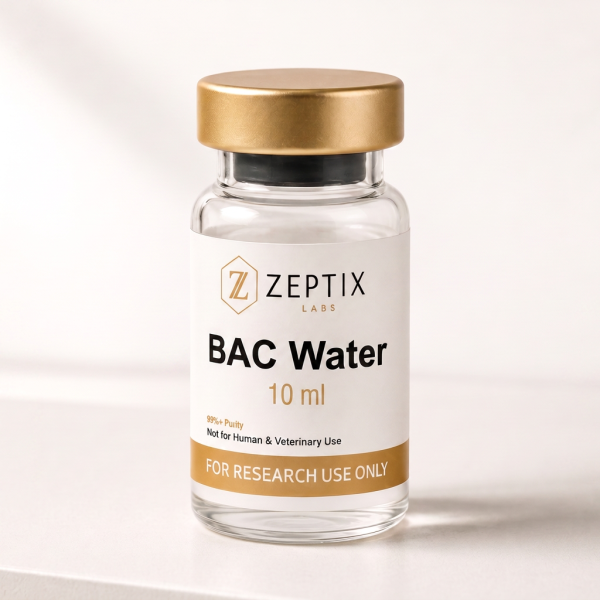
Bacteriostatic water, often searched as BAC water, is sterile water that contains a bacteriostatic preservative, commonly benzyl alcohol at 0.9%. Laboratories use it as a reagent in some reconstitution and multi-withdrawal workflows. It is not a peptide and it is not a clinical product on this site.
How it differs from sterile water
Sterile water for injection, as a regulatory category, is a different article with a different label. Bacteriostatic water is chosen in some research settings because the preservative limits bacterial growth after the stopper is punctured. Whether that fits a given assay, and whether the preservative interferes with the peptide or the readout, is a methods decision.
Where it sits in the Zeptix catalog
BAC water is filed under laboratory supplies. Peptide SKUs are listed separately so lot paperwork stays clean. See the storage article for how reconstitution fits a lyophilized-peptide workflow.
Bacteriostatic water from Zeptix Labs is for laboratory, analytical, and research purposes by qualified personnel only.
Research context and evidence base
Bacteriostatic water is water containing a preservative, commonly benzyl alcohol, and is not itself a peptide. Its label, container, preservative concentration, and intended laboratory role should be documented separately from the lyophilized material. Compatibility with a specific sequence or assay is a protocol question, not an assumption.12
How to interpret the published evidence
Evidence should be sorted by study type before it is summarized. Analytical characterization establishes what material was tested; cell work can suggest pathways; animal models can explore integrated biology; and human studies, when they exist, apply only to their regulated product, population, and design. One layer should not be presented as if it proves the next.3
Experimental design questions
A BAC-water workflow should document the preservative concentration, container history, puncture events, storage conditions, and compatibility with the analytical method. Include a solvent-only control so preservative or vehicle effects can be distinguished from peptide effects. Institutional procedures and the reagent label take priority over generic web instructions.
Building a reproducible laboratory record
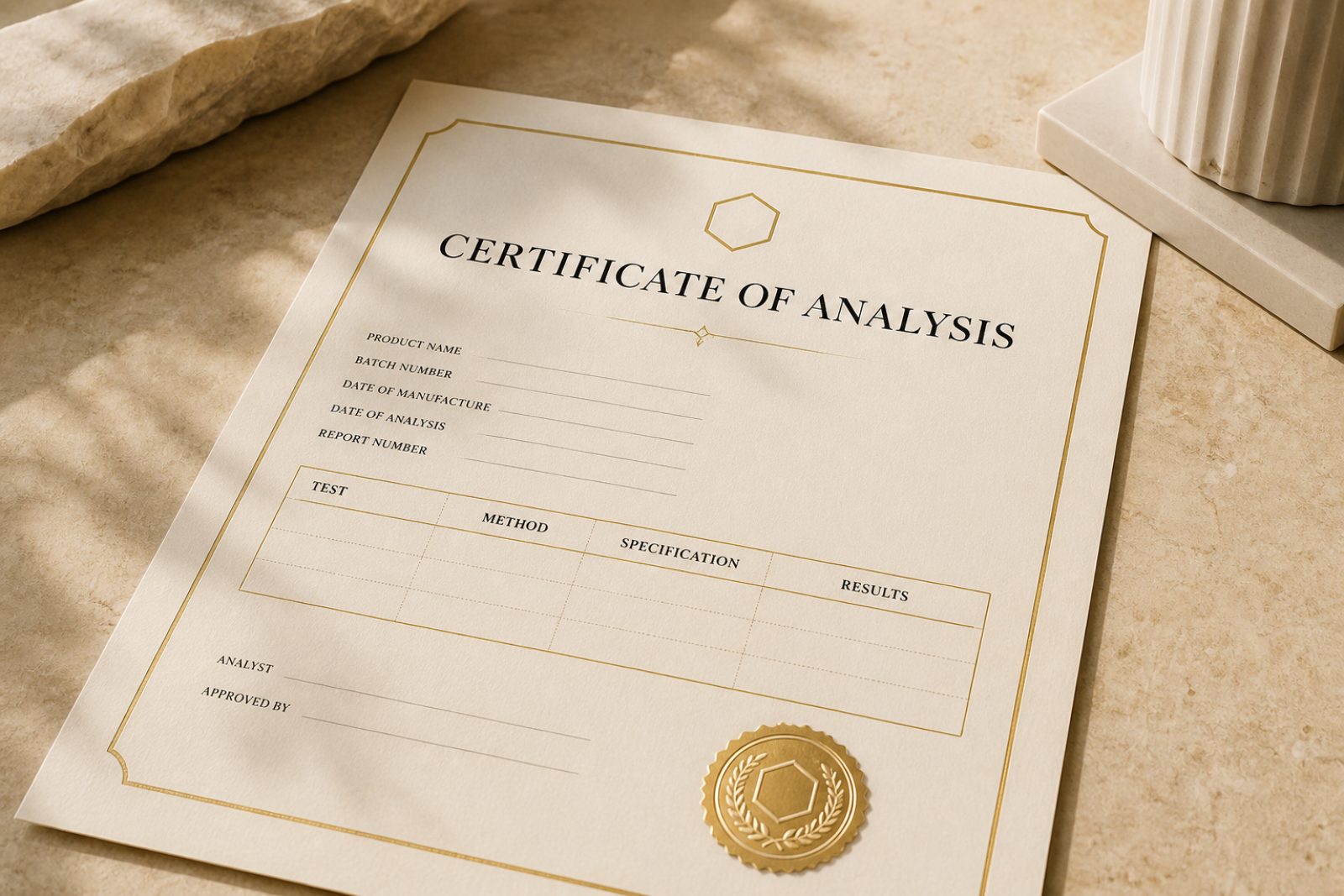
For work involving What Is Bacteriostatic Water, record the supplier, SKU, lot number, labeled amount, receipt date, storage history, reconstitution conditions, concentration calculation, control material, instrument or assay version, and prespecified endpoint. Keep the matching certificate of analysis with the run record. These details make a result auditable and help distinguish biological variation from a handling or identity problem.
- Match the exact compound, sequence, modification, and formulation to the cited methods.
- Use positive, negative, and vehicle controls appropriate to the assay.
- Define concentrations, time points, exclusions, and endpoints before reviewing results.
- Report null and unexpected findings alongside the planned readouts.
Quality, limitations, and research-use status
A certificate of analysis supports lot traceability but does not establish a biological outcome. Investigators remain responsible for method suitability, independent confirmation when required, and compliance with institutional rules. Zeptix Labs materials are supplied for qualified laboratory research only and are not drugs, supplements, cosmetics, foods, or materials for human or veterinary administration.
Reporting results without overreach
When reporting What Is Bacteriostatic Water, state what the experiment directly measured and keep interpretation within that boundary. Include model limitations, uncertainty, failed quality controls, and alternative explanations. Avoid turning preclinical observations into treatment language or assuming that a statistically significant marker change is biologically important. Clear limitations make the article more useful to researchers and prevent laboratory evidence from being mistaken for consumer guidance.
References
- U.S. National Library of Medicine. “Bacteriostatic Water for Injection” labeling records. DailyMed. https://dailymed.nlm.nih.gov/dailymed/search.cfm?query=bacteriostatic%20water
- U.S. Food and Drug Administration. “Inactive Ingredient Database: Benzyl Alcohol.” https://www.accessdata.fda.gov/scripts/cder/iig/index.cfm
- Centers for Disease Control and Prevention. “Preventing Unsafe Injection Practices.” Injection Safety. https://www.cdc.gov/injection-safety/hcp/clinical-safety/
- Manning, M. C., et al. “Stability of Protein Pharmaceuticals: An Update.” Pharmaceutical Research 27 (2010): 544–575. https://pubmed.ncbi.nlm.nih.gov/20143256/
- Wang, W. “Instability, Stabilization, and Formulation of Liquid Protein Pharmaceuticals.” International Journal of Pharmaceutics 185, no. 2 (1999): 129–188. https://pubmed.ncbi.nlm.nih.gov/10460913/
- Bak, A., et al. “Physicochemical and Formulation Developability Assessment for Therapeutic Peptide Delivery.” AAPS Journal 17 (2015): 144–155. https://pubmed.ncbi.nlm.nih.gov/?term=Bak+physicochemical+formulation+developability+therapeutic+peptide+delivery